How a Semantic Chatbot Cuts Website Visitor Frustration
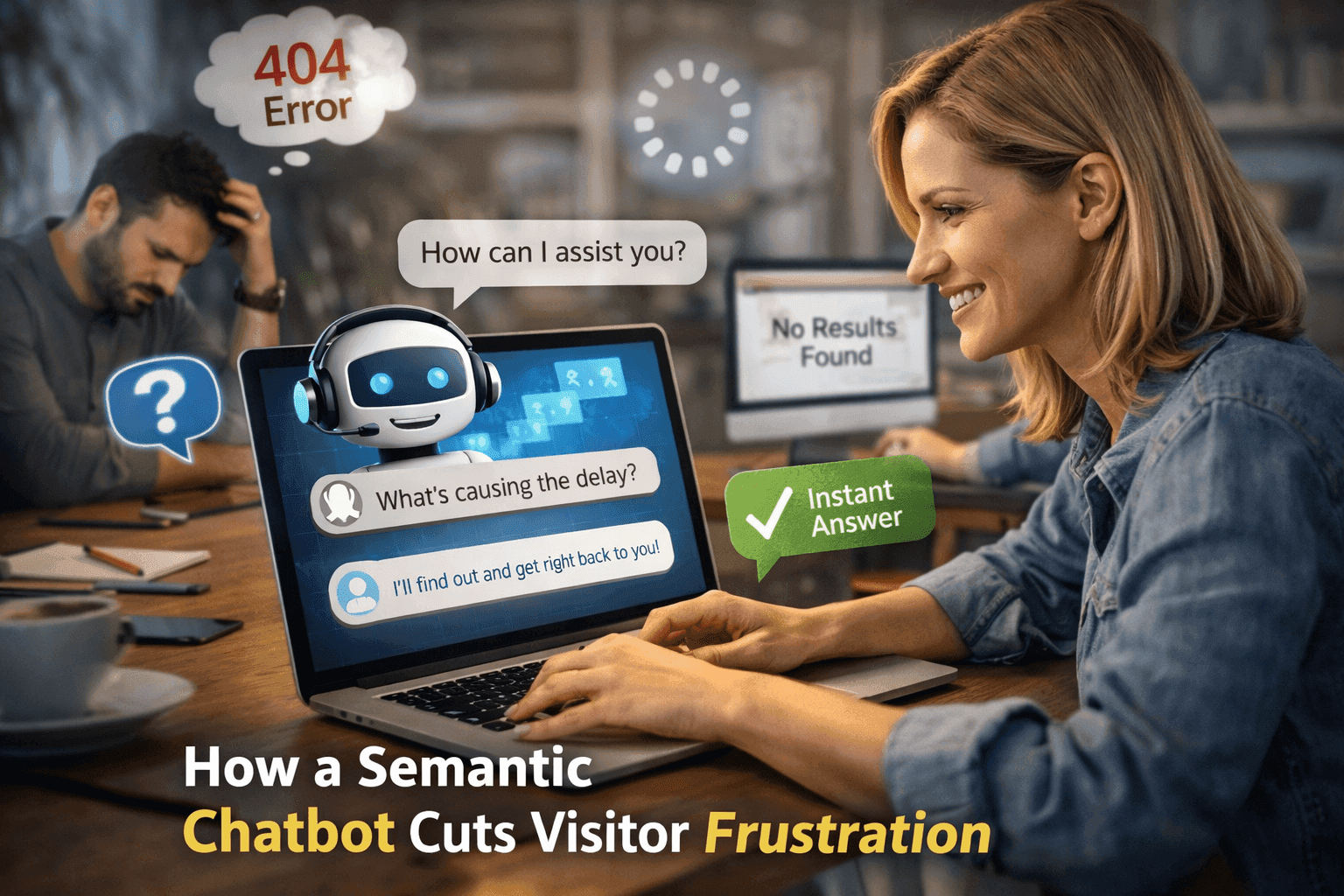
Website visitors arrive with questions, but many bounce when chatbots or search can't grasp their intent. Keyword-only matching forces users to guess phrasing, increasing frustration and lost opportunities. A semantic chatbot interprets meaning, delivers instant answers with sources, and integrates easily. Here's how it benefits B2B SaaS sites.
Why ordinary chatbots let visitors down
Keyword-only matching creates dead ends
Most on-site chatbots match exact words, not meaning. If a visitor asks "How do I return a product bought last month?" but the FAQ says "return policy," the bot may fail. Each retry raises bounce risk.
For example, a query about "API rate limits" might not match documentation titled "usage quotas," leaving developers stranded.
Visitors must guess the right phrasing
Without intent understanding, users must think like the bot. They try synonyms or simplify, wasting time. On high-intent pages like pricing or support, this friction hurts conversions.
A prospect asking "cost for 20 seats" might not trigger a response if the bot expects "team pricing tiers."
How semantic search changes the game
Understanding intent, not just words
Semantic chatbots use NLP to grasp query meaning. They link "return a product bought last month" to "return policy for recent purchases," pulling correct content despite wording differences.
Queries like "password reset," "forgot password," and "account recovery" all map to the same solution, ensuring consistent answers.
Answer-first responses with clickable sources
Instead of link lists, the bot provides a concise answer upfront, followed by sources. Visitors verify instantly and dive deeper if needed, building trust and reducing support contacts.
Adding Seekrs to any site – plug-and-play
One-line JavaScript snippet
Seekrs integrates via a single script tag in your header or footer. Learn how Seekrs works to see how it overlays your existing search or chat without redesign.
Works with WordPress, Shopify, custom CMS
As a lightweight layer, Seekrs works with WordPress, Shopify, and custom CMSs out of the box. You retain full control over styling. See Seekrs in action across platforms.
Measuring the real impact on your business
Drop in bounce rate and support tickets
Quick answers keep visitors engaged and reduce support load. For Kotak Zurich Insurance, Seekrs surfaced missing content on water‑logging coverage, cutting related tickets. A SaaS client similarly saw fewer billing inquiries.
Rise in conversions and time on page
Clear answers guide users to next steps—sign-ups, purchases, or deeper reading. Kotak Zurich achieved an 18% reduction in cost‑per‑lead and higher engagement. E-commerce sites report increased conversions when bots handle product questions. Get started with Seekrs to drive similar results.
Practical checklist for launching a semantic chatbot
- Audit high-traffic pages for common visitor questions.
- Identify content gaps where intent isn't matched.
- Deploy the Seekrs snippet in staging.
- Test answers for accuracy and source links.
- Monitor bounce rate, tickets, and conversions over 4–6 weeks.
- Book a personalized demo to see tailored results: Schedule here
Conclusion
Keyword-only chatbots frustrate visitors and drive them away. Semantic search—understanding intent, providing sourced answers, and easy integration—turns that around. Seekrs offers transparency and speed to boost engagement, reduce support, and increase conversions. Ready to transform your site? Book a demo today.