What Is Intent-Based Search—and Why Keyword Matching Falls Short
Most websites treat their search bar as a simple utility—a tool to find a specific page. But for the modern B2B visitor, the search bar is often the primary interface to your site. When users can't find what they need because they didn't use the "right" word, they don't complain; they simply leave. This is how poor search quietly kills high-intent traffic.
To stop the bounce, you need to move beyond keyword matching and implement an intent-based search experience. This approach shifts the focus from matching characters to understanding meaning.
What is an Intent-Based Search Experience?
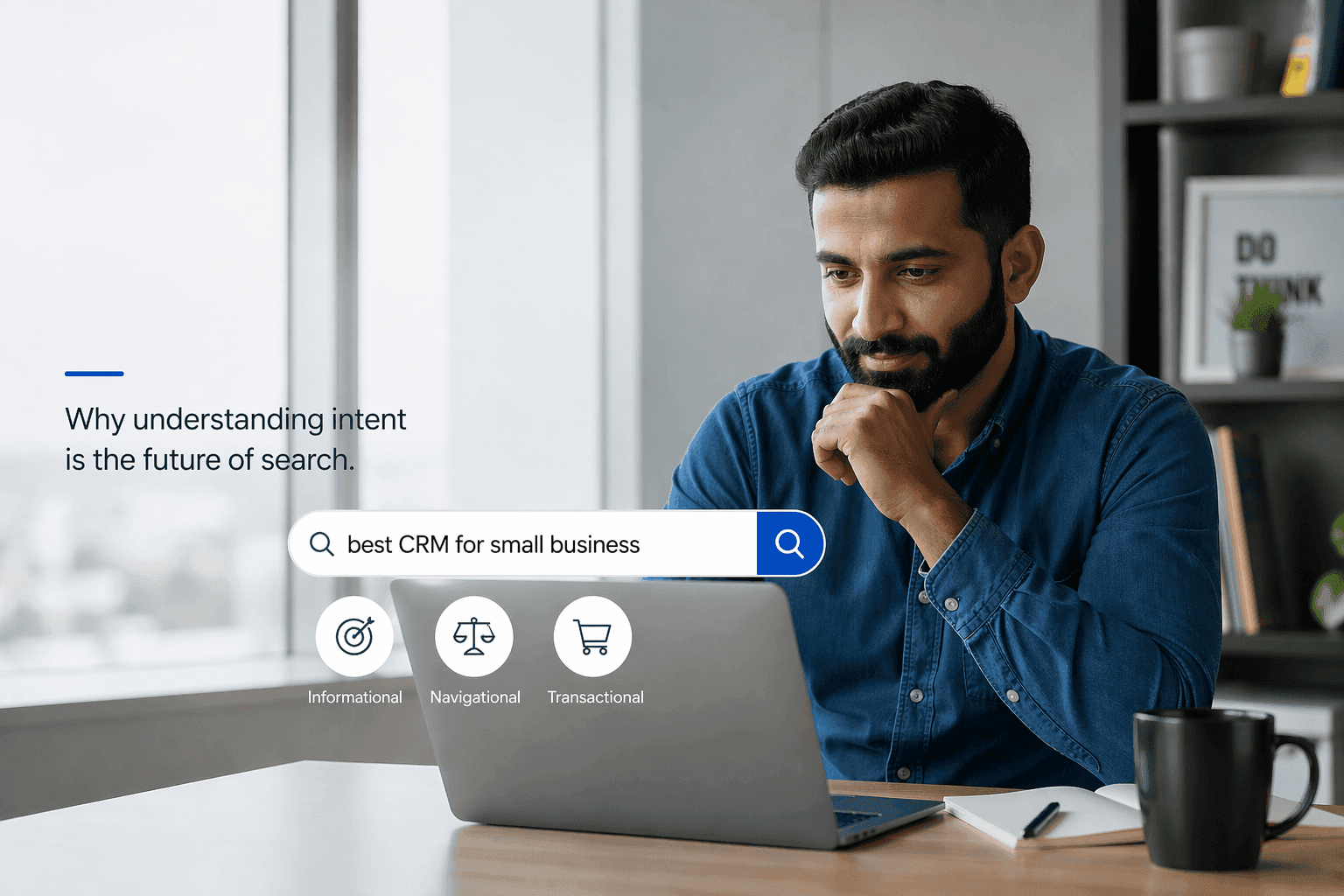
An intent-based search experience is a system that understands the goal behind a query, rather than just the words used. Instead of looking for a literal string of text, it interprets the user's intent to provide the most relevant answer.
Moving from 'Word Matching' to 'Meaning Matching'
Traditional search relies on keyword matching. If a user searches for "how to integrate with Shopify," but your page is titled "Shopify Connection Guide," a basic search tool might miss it because the word "integrate" wasn't present.
An AI-powered site search system understands that "integrate" and "connection" are semantically related. It matches the meaning, not just the words, ensuring the user finds the answer regardless of the phrasing.
The Role of Semantic Search in Understanding User Goals
This is made possible through an AI-powered semantic search layer, which uses natural language processing (NLP) to map queries to concepts. By understanding the context and relationship between words, the system can identify whether a user is looking for a tutorial, a pricing page, or a technical specification, delivering a result that aligns with their actual goal.
Why Traditional Keyword Search Creates 'Dead Ends'
When your search depends on exact phrasing, you're offering an obsolete interface. Modern users expect systems to adapt to them, not the other way around.
The Frustration of the 'No Results Found' Page
Zero-result pages are the ultimate dead end. They tell the user, "We don't have the answer, even if we do." This leads to search abandonment, where a high-intent visitor gives up on your site entirely.
When Exact Matches Miss the Actual Answer
Even when results are returned, they are often irrelevant. For example, a user might search for "payment options" and get a list of blog posts about payment trends, rather than the pricing page they actually need. This mismatch between user intent and the result is a friction point that drives users away.
SEO Intent vs. On-Site Search Intent: The Critical Difference
Many teams spend months optimizing landing pages for Google, but ignore the search experience once the user arrives. There is a critical difference between acquisition intent and experience intent.
Acquisition Intent (Getting them to the site)
SEO is about getting the user to click through from a search engine. The goal is to land them on your site. This is the "top of the funnel" intent.
Experience Intent (Helping them once they arrive)
Once a visitor is on your site, their intent is focused on discovery and conversion. An intent-aware site search focuses on the experience intent—helping them find the exact answer or product they need to move forward. While SEO gets them to the door, intent-based search ensures they don't leave through it.
How an Intent-Based Experience Transforms the User Journey
Users don't differentiate between "marketing pages," "documentation," or "FAQs." They just want answers. An intent-based approach unifies these silos into a single discovery layer.
Answer-First Results: Reducing Time-to-Value
Instead of providing a list of links, an "answer-first" model provides a direct response to the user's query, backed by clickable sources. This reduces the time-to-value, giving the user the answer instantly while allowing them to verify the source and dive deeper.
Handling Natural Language Queries
Users often search using natural language, such as "How do I set up my account?" A semantic search layer handles these queries effortlessly, understanding the intent behind the "How do I" and directing the user to the correct setup guide.
Guiding Users via Intent-Aware Suggestions
Beyond the search bar, intent-aware suggestions and autocomplete can guide users toward the right path, preventing them from hitting a dead end before they start typing.
Business Outcomes of Intent-Driven Discovery
Implementing a semantic search layer isn't just a UX improvement; it's a business strategy. For example, Seekrs has been implemented on the TeamLease Regulation Technology website to provide a seamless search and guidance layer for their B2B audience.
Deflecting Repetitive Support Tickets
When users can find accurate answers instantly, they stop submitting repetitive support tickets. For instance, if a user can instantly find the answer to "How do I reset my API key?" via search, they won't open a ticket for it.
Increasing Conversion by Removing Friction
By removing the friction of "no results found" and irrelevant links, you guide users toward the conversion point faster. When a user finds the answer to a critical question—like "Does this integrate with my CRM?"—they are more likely to convert.
Identifying Content Gaps Through Search Intelligence
Intent data is more valuable than standard analytics. By analyzing what people are searching for—and what they can't find—you gain content intelligence. This allows you to identify exactly where your content has gaps and which pages need improvement to meet user demand.
Practical Steps to Implement Intent-Based Search
To move from a keyword-based system to an intent-based one, follow this checklist:
Search Experience Audit Checklist:
- Audit your "no results found" logs to see what users are searching for.
- Identify the most common natural language queries that current search fails to handle.
- Check if users are landing on irrelevant pages despite using common terms.
- Identify the gaps between your internal terminology and the way users actually speak.
Integrating a Semantic Search Layer
Stop letting users bounce from your search bar—experience a semantic search layer with Seekrs. By plugging into your existing knowledge base, Seekrs turns your static content into a dynamic, self-serve experience that understands what your visitors actually mean.
FAQ
What is the difference between keyword-based search and intent-based search?
Keyword-based search looks for exact matches of words. Intent-based search uses semantic search to understand the meaning and goal behind a query, providing relevant results even if the exact words aren't used.
How does semantic search help a website understand what a user actually means?
Semantic search uses natural language processing (NLP) to map queries to concepts and relationships between words, allowing the system to identify the user's goal rather than just matching characters.
Why is on-site search intent different from SEO keyword intent?
SEO intent is about acquisition—getting a user to the site. On-site search intent is about SEO intent is about acquisition—getting a user to the site. On-site search intent is about experience—helping a user find a specific answer or discovery path to convert on your website.
How does an 'answer-first' search experience improve conversion rates?
An answer-first experience provides direct answers to queries, reducing the user's time-to-value and removing the result of the user's time-to-value and removing friction, which leads to higher conversion rates.
How can search data be used to improve overall website content?
By analyzing search logs and zero-result queries, brands can identify content gaps and the user's actual intent, allowing them to create content that directly addresses user needs.