Your Website Needs a New AI Search Engine
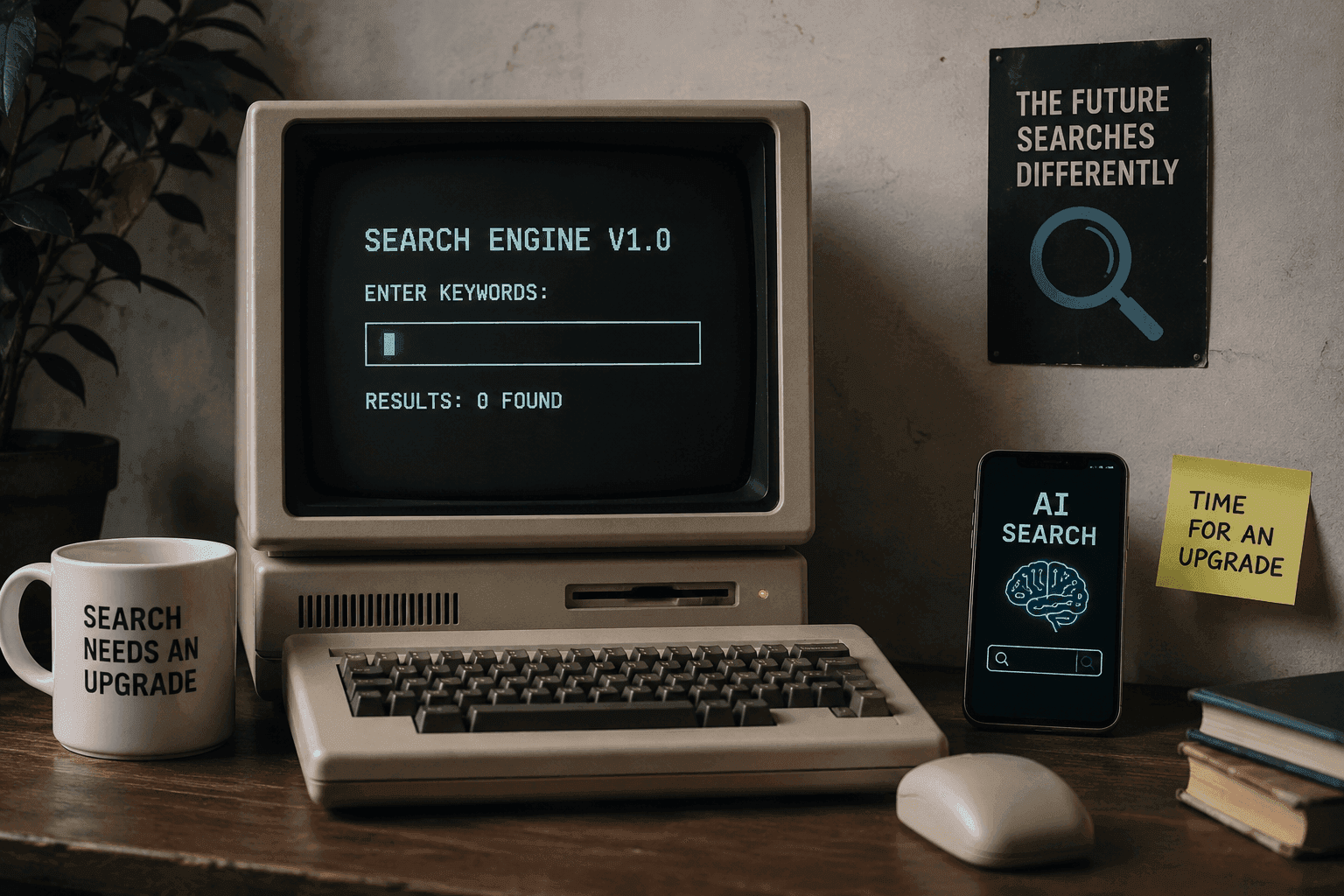
Most B2B websites treat their search bar as a forgotten utility. Companies invest heavily in SEO to attract traffic and spend thousands on UX design to modernize the interface, yet the search experience remains broken. When a visitor actually uses the search bar, they are often met with a "No results found" page or a list of links that barely match their intent.
This is a silent drop-off. Users arrive seeking specific answers, but instead of finding them, they are sent on a treasure hunt. User behavior has evolved, but site search hasn't. People now ask queries naturally, and traditional keyword-matching search is simply unable to keep up.
To stop the bounce, your website needs an AI-powered semantic search layer that understands intent, not just words.
The Shift from Keyword Matching to Meaning
Why traditional site search fails the modern user
Traditional search engines rely on lexical search—exact word matches. If a user searches for "How do I integrate with Shopify?" and your help article is titled "Shopify Integration Guide," the system might find it. However, if the user asks "How do I connect my store?", the search often fails because the word "connect" isn't in the title.
This creates a frustrating experience where the user knows the answer exists on your site, but the search bar can't find it. When search fails, users don't try different keywords; they leave.
Defining the 'New Search Engine AI': Semantic vs. Lexical search
A new search engine AI is built on semantic search. Unlike lexical search, it uses Natural Language Processing (NLP) and vector embeddings to understand the meaning behind a query.
Instead of matching strings of text, it recognizes that "integrate" and "connect" are related concepts. This shift transforms your website from a simple information storage unit into a system that understands people.
Consumer AI Search vs. On-Site AI Search
The difference between a general AI and a site-specific search layer
There is a critical difference between a general AI (like Perplexity or Gemini) and a site-specific search layer. General AI knows a little bit about everything, but it doesn't know your specific business, your latest product updates, or your unique documentation.
An intelligent site search is grounded in your own data. It doesn't guess; it uses your existing content to provide precise, company-specific answers.
Why 'hallucinations' are unacceptable for business documentation
In a B2B context, "hallucinations"—where an AI generates a plausible-sounding but false answer—are a liability. You cannot have an AI telling a customer that your software has a feature it doesn't, or misquoting your pricing.
The importance of grounded answers and clickable sources
To maintain trust, a new AI search engine must prioritize transparency. This is why Seekrs emphasizes "answer-first" responses backed by clickable sources. When the AI provides an answer, it cites exactly which page or paragraph it derived that information from, allowing users to verify accuracy and continue their journey on your site.
How a New AI Search Engine Improves the User Journey
Reducing bounce rates by eliminating 'No results found' pages
Zero-result pages are the ultimate dead end. By understanding intent, a semantic search engine can provide relevant results even if the user doesn't use the exact terminology found in your documentation. This eliminates the "No results found" screen and keeps users engaged.
Deflecting support tickets through instant, accurate answers
Many support tickets are repetitive. For example, a user might submit a ticket asking "How do I reset my API key?" when the answer is clearly in your docs. When users can find accurate answers instantly, they stop submitting tickets, reducing overhead for your support team.
Increasing conversions by guiding users to the right page faster
When a user searches for a solution to a problem, they are in a high-intent state. If they find the answer quickly, the friction of discovery is removed, and they are more likely to convert. By shortening the path to the answer, you guide them toward a purchase or sign-up faster.
Key Capabilities of Modern Intelligent Site Search
Natural Language Processing (NLP): Understanding 'How do I...' queries
Modern AI search understands the structure of natural language. It can handle complex queries like "How do I set up my account for the first time?" without requiring the user to think like a search engine.
Intent-aware suggestions and autocomplete Instead of just suggesting words, intent-aware autocomplete guides the user toward the most common and successful search paths. It helps users refine their query before they even finish typing.
Content Intelligence: Using search data to find content gaps Search is a powerful data tool for growth teams. By analyzing what people are searching for—and what they can't find—you can identify content gaps. For instance, if 500 people search for "refund policy" and get no results, you know exactly what page you need to write.
Implementing AI Search Without a Total Website Rebuild
The 'Search Layer' approach: Plugging into existing knowledge bases
You don't need to rebuild your entire website or change your CMS. A new AI search engine can be implemented as a semantic search layer that plugs into your existing knowledge base, docs, and FAQs. Seekrs is designed to integrate with minimal disruption to your current setup.
Measuring success: From search-to-click ratios to ticket deflection
To measure the success of your AI search, track these key metrics:
- Search-to-click ratio: Are users finding what they need?
- Zero-result rate: How many users encounter a dead end?
- Ticket deflection rate: Is the number of support tickets for common questions decreasing?
- Conversion rate from search: How many high-intent users are converting?
AI Search Implementation Checklist
- Audit current search logs: Identify the most common "No results found" queries.
- Identify key content sources: Map out your help center, product pages, and blog.
- Identify the 'Answer-First' requirement: Ensure the AI provides direct answers with sources.
- Set up tracking: Define how you'll measure ticket deflection and bounce rates.
- Deploy the search layer: Integrate the search bar into your existing UI.
FAQ
What is the difference between a traditional search engine and an AI-powered semantic search engine?
Traditional search engines use lexical search (keyword matching), which requires the user to use the exact words found in the content. AI-powered semantic search understands the meaning and intent behind the query, allowing it to find relevant results even if the exact words aren't used.
How does AI search help reduce customer support overhead?
By providing instant, accurate answers to common common questions, users can find the solution themselves without needing to submit a support ticket. This turns your documentation into a self-serve experience.
Why is it important for AI search results to provide direct sources/links?
Direct sources prevent AI hallucinations and build trust. By showing the user exactly where the answer came from, the user can verify the accuracy of the information and provide a deeper context.
Can a new AI search engine be integrated into an existing website without the need for a CMS change?
Yes. A semantic search layer can be plugged into your existing knowledge base and content, working as an overlay that doesn't require a total website rebuild or a change in your CMS.
Conclusion
Your website's content is already there; it just needs to understand people. Stop sending your users on a treasure hunt and move from information storage to intent understanding. Experience the difference of semantic search—try Seekrs on your website today.